





Rethinking the Canopy: The New Rules for Planting Urban Trees in a Warming World
As concrete jungles turn into literal furnaces during summer heatwaves, the push for urban afforestation has shifted from an aesthetic luxury to a public health survival strategy. We know the basic physics: trees cool neighborhoods through shade and evapotranspiration. However, as global temperatures push into uncharted territory, urban planners and arborists are facing a harsh reality—the traditional trees we rely on for shade are themselves dying of heat and thirst.
 To build a climate-resilient urban canopy, we have to look past the classic choices and completely rethink how we design our green spaces.
Moving Beyond the "Monoculture Shade"
For decades, European and North American cities relied heavily on a handful of reliable species—like the grand London plane tree, majestic maples, or uniform rows of ornamental conifers. But relying on one or two dominant species creates an ecological single point of failure. Diseases spread faster through uniform canopies, and many of these classic trees are incredibly water-intensive, struggling to survive long dry spells without massive artificial irrigation.
Furthermore, needle-bearing trees and narrow conifers might look green year-round, but their thin foliage does very little to block harsh solar radiation at the peak of the day.
The Strategic Pivot: Micro-Leaves vs. Hidden Tropical Resiliency
The modern approach to urban planting requires species that offer maximum shade with minimal water demands. Interestingly, landscapers are looking to two distinct evolutionary strategies:
- Deep-Rooted Natives: Maximizing the use of native species from slightly warmer, arid microclimates that have evolved to tolerate prolonged droughts.
- Drought-Tolerant Exotics: Integrating hardy, non-invasive species from subtropical or Mediterranean zones (such as certain resilient varieties of Brachychiton or drought-hardy figs). Contrary to popular belief, some of these broad-leaved varieties are remarkably efficient, storing water in their trunks and offering massive, dense canopies that act like natural umbrellas without draining local water tables.
The Power of the Layered Forest (Vertical Strata)
The old way of planting a tree was simple: dig a hole in a sidewalk, drop in a sapling, and surround it with iron grates or asphalt. Today, we know that a single tree standing alone in a sea of concrete is highly stressed and inefficient.
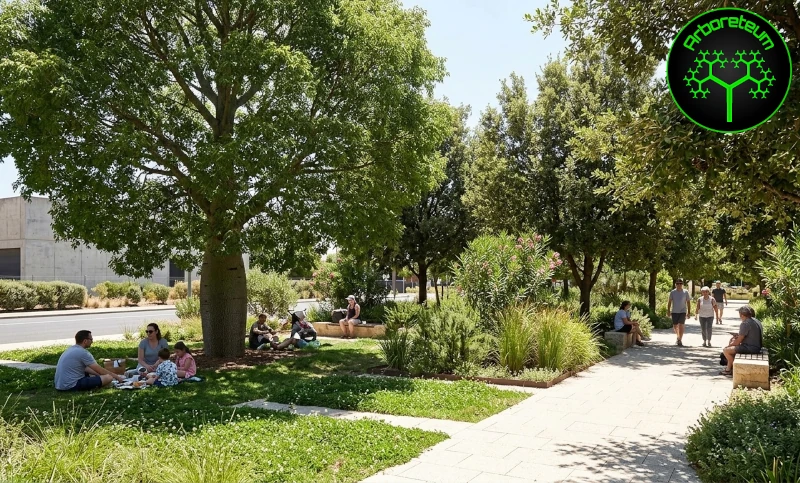
True cooling efficiency comes from vegetative layering. Instead of isolated trees, modern urban design mimics natural forests by creating three distinct levels:
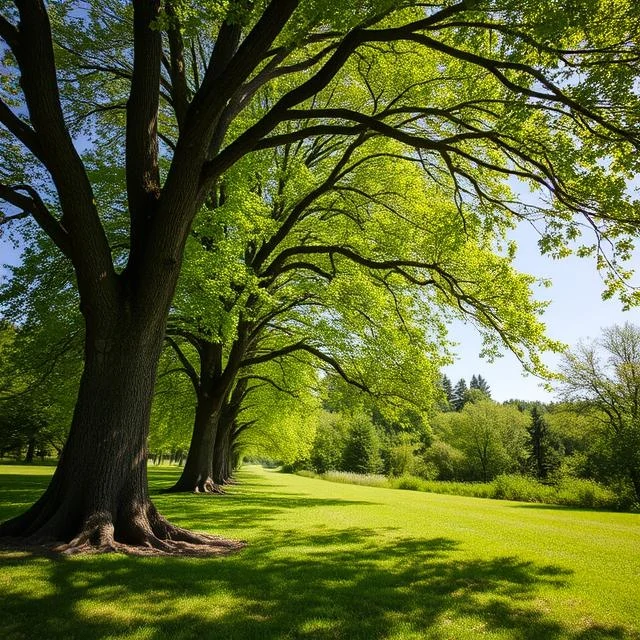
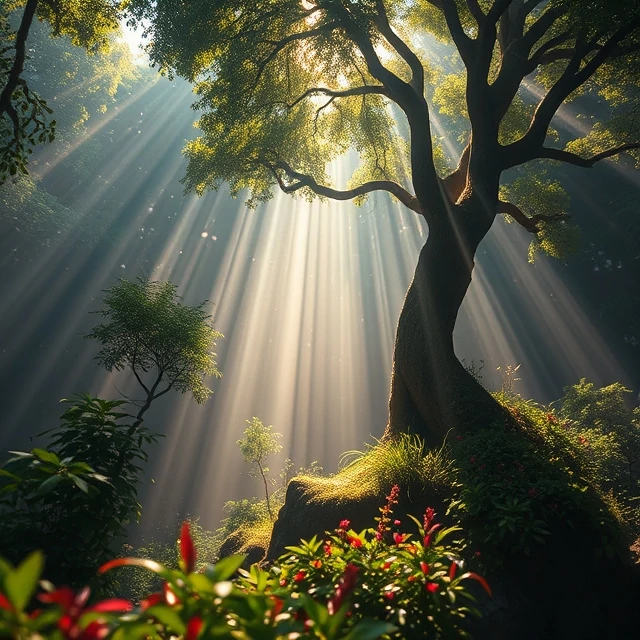
- The Overstory (The Canopy): High, broad-leafed trees that intercept direct sunlight far above the ground.
- The Understory: Mid-sized shrubs, bushes, and tall perennial grasses that catch filtered light, cool the ambient air, and shelter the soil.
- The Living Groundcover: Replacing traditional turf lawns—which act like water-guzzling sponges and burn easily—with deeply rooted clover, mosses, or local wild grasses.
This multi-tiered system traps cool air near the ground and prevents the sun from ever making direct contact with the earth.
Fixing the Surface: Trees Can’t Fight Asphalt Alone
Even the most resilient tree cannot save a neighborhood if it is surrounded by black asphalt. Dark, impermeable ground surfaces absorb solar radiation all day and radiate it back out at night, creating the dreaded "urban heat island" effect.
When a multi-layered green space replaces unshaded asphalt, the local temperature difference can be staggering—often dropping surface temperatures by 10°C to 15°C. By tearing up unnecessary concrete, utilizing light-colored permeable pavements, and layering vegetation, cities can transform unlivable concrete heat-traps into genuine, breathable urban sanctuaries.